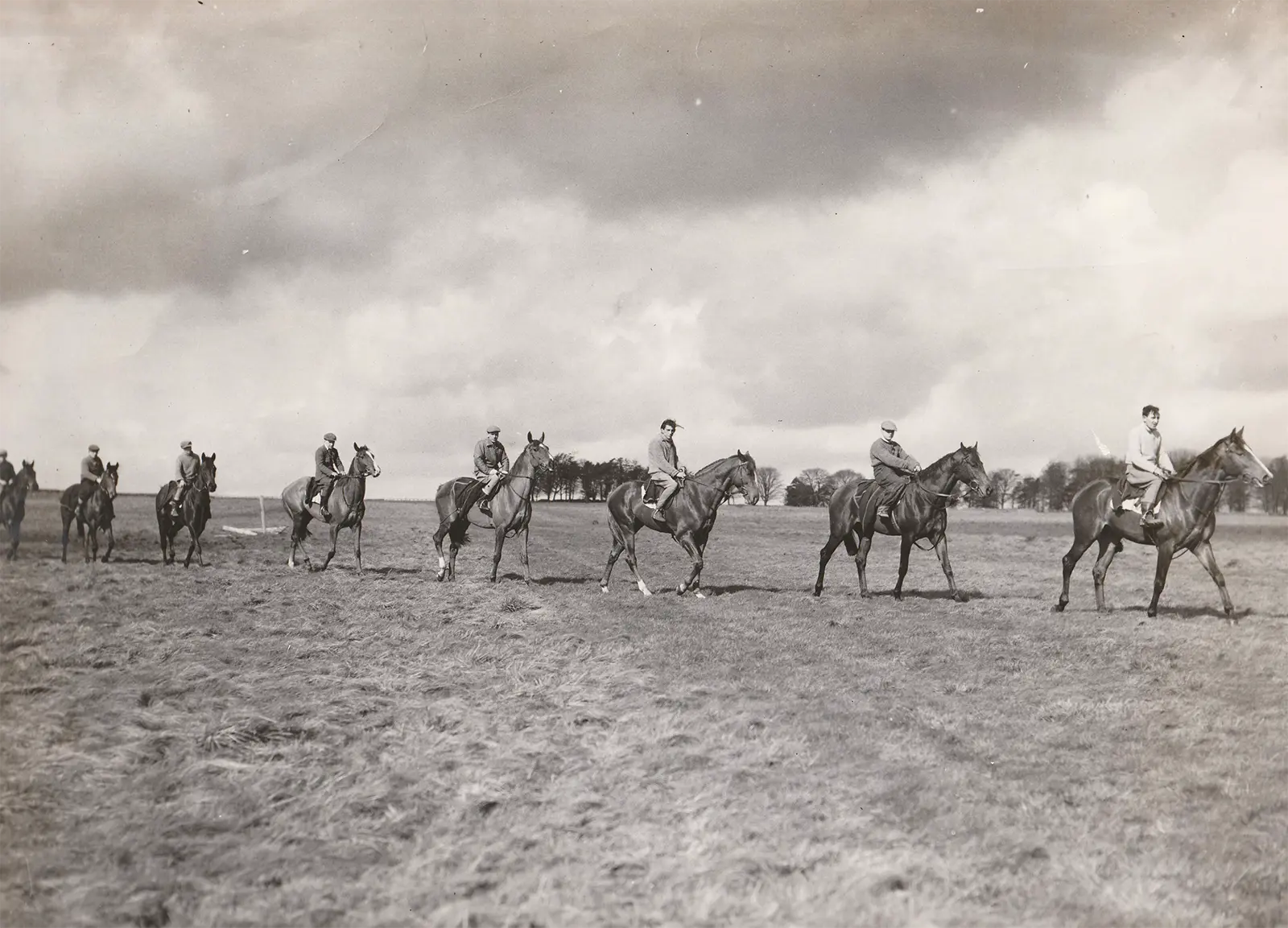
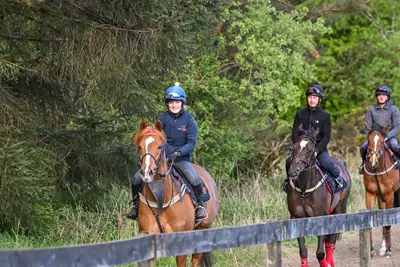
Hambleton House and the surrounding area is steeped in racing history. Once the site of Hambleton Racecourse, the Hambleton Hills have been famous for hundreds of years as the best ground for racing and subsequently training racehorses and were the scene of horse racing and training long before the days of Racing Calendar records. Approximately 6 miles from Thirsk and 8 miles from Helmsley, the whole area is saturated with centuries old traditions, romance, drama and other interesting stories of famous horses, jockeys, owners and sporting incidents of the past.
Records of the racecourse date back to 1612, an equivalent timeframe to beginnings of racing at Newmarket. In 1740 an act of parliament decreed that matches could only be run at Hambleton and Newmarket and no race run for less than £50. The crown awarded Hambleton with the Royal Gold Cup race each year and the course was frequented by northern noblemen and gentry in the seventeenth century. Records dating back to the 17th Century show that many good horses were trained out of Hambleton House and many tales can be told by the locals about the fantastic wagers that were bet on horses trained here.
The Dialstone winning post, also used for weighing the jockeys, was synonymous with Hambleton and can be seen in the famous John Wooton painting. The movement of the Hambleton Guineas to York in 1774 marked the beginning of the end of the racecourse with its location causing its downfall without which the course would have rivalled Newmarket for many years to come. A highlight for the racecourse as it began to wind down was when Hambletonian won his first race at the course in 1795 before he went on to win his famous match with Diamond at Newmarket in 1799 depicted in the famous painting by George Stubbs.
A number of trainers were based around the moor from the 18th century with the golden era for Hambleton as a training ground coming in the 19th century, The name Hesseltine is absolutely synonymous with Hambleton with Lenny and Bob training the legendary race mare Alice Hawthorn to win over 50 races in her career and is considered one of the best mares in racing history. The ‘Wizard of the North’ John Scott began his career in racing apprenticed at Hambleton and brought his string to Hambleton in the summer when Malton became too firm with many of his 40 classic winners find tuned at Hambleton on the hallowed turf.
Other names synonymous with Hambleton include the Stebbings, The Dawson brothers, William I’Anson, William Sanderson, Tom Green and Joseph Vasey. In 1935 Sir Noel Murless arrived in Hambleton and was joined two years later by Sir Ryan Price who trained from the hotel yard until World War II broke out. Sir Noel made great improvements to the gallops and sent out a Cheltenham Foxhunters winner from Hambleton before the war. He returned in 1945 with his family and trained from Hambleton House until 1947 in which time he trained a Steward’s Cup winner. He loved Hambleton and never really wanted to leave so much so his ashes are scattered on the gallops. Jack Calvert was based at Hambleton from 1955 until 1983 prior to the yard’s modernisation and had many winners including 1977 Ebor winner Move Off and since they moved in Bryan and Vicky have continued to make vast improvements to this historic yard and gallops.
Equine names that were either trained or raced at Hambleton include Bonny Black, The Saddler, Rockingham, Alice Hawthorne, Thormanby, Saucebox, The Vatican, Ptarmigan, Raisin and King of Clubs. The original stable yard still exists with the old mangers still in place, many of them having been occupied at some time by one of the famous horses that were trained here.
Hambleton certainly boasts an almost unrivalled connection with racing history and whether it is something to do with the altitude (1300 ft above sea level), the facilities, or the relaxing surroundings this ancient training ground is steadily making its way back to the forefront of top racehorse training establishments in the country.
*Beth is currently undertaking a research project into the history of Hambleton with a view to writing a book. If you have any information or would like to contribute please email beth@bryansmart-racing.com. Additionally, if you have any relevant artworks, photos or artefacts that relate to the history of racing in Hambleton please get in touch.